
Community Guidelines: How to Write, Enforce, and Live By Your Community Rules (With Examples and Templates)

What happens when your favorite and most reliable contributor, the one whose daily activity single-handedly retains almost 17% of your members, breaks two of your strictest rules?
That’s an experience I would never wish on any community founder or creator, yet I had to sit with that question the day it happened inside my own community. Because on one end, this guy was always cheering people on and bringing the vibes, but on the other, he unwillingly (at least, that’s what I tell myself) broke the rules everyone had signed a contract on, including me, the person who wrote them in the first place.
The situation is one many creators and community moderators run into, and perhaps the reason the decision that follows feels so hard is that the rules were never designed to handle it from the very beginning.
So based on my 20 years of helping coaches, creators, and educators build learning communities, I’ll give you the practical playbook I wish I had back then: how to write community guidelines that work well under pressure, how to enforce them without affecting the culture you built, and how to turn a set of rules into a living, breathing sense of shared expectations that keeps your comunnity safe and feeling ‘homey.’
And because you learn far more from doing than from reading, I’ll show you how, give you examples you can copy, spell out the results to expect, and tell you what to do when someone ignores the rules anyway.
Let’s begin with what community guidelines are.
Table of Contents
What Are Community Guidelines?
Community guidelines are the documented rules that explain the behavior you expect inside your community. For your members, they clarify what’s acceptable, explain what’s prohibited and the consequences, and provide a shared reference point when a question comes up. For your moderators, on the other hand, they establish consistent standards for decisions and provide the documentation to point to when enforcing a rule, which removes the ugly ambiguity that turns a small call into a fight.
And for the community as a whole, they protect people from harassment, keep discussions productive, and build trust through standards everyone can predict.
When members can’t predict how you’ll respond to a problem, they hold back, and a community where people hold back falls silent. So the value of getting this right shows up in whether your members feel safe enough to post, disagree, share ideas, and keep coming back.
To put it simply, strong guidelines are the foundation on which every one of your member retention strategies rests, because people stay where they feel protected and leave where they don’t.
There are three things you need to know before writing your rules.
- First, you have the big-picture expectations, the guidelines themselves, which describe the tone and mindset you want, like “Give more than you take.”
- Second, you have the specific, enforceable community rules, the clear dos and don’ts, such as “No self-promotion outside the #resources channel.”
- Third, you have your community standards, the deeper values that explain why the rules exist at all, like “We’re here to build a culture of trust and accountability.”
So when people ask about community guidelines vs. rules, the answer is that guidelines set the tone, rules set the enforceable line, and standards carry the values underlying both.
You need all three to do it right.
With that settled, let’s look at why clear guidelines pay off in ways you can measure.
The Benefits of Clear Community Guidelines
You might be tempted to treat rule-writing as an option or postpone it until after you build your community and get your first 10 members, but there are benefits to making it a priority.
The following are just a few of the best ones:
- Clear rules spark the conversations you want: Guidelines set expectations for what belongs in the community and stop conflict before it starts. When members know that thoughtful questions are welcome and drive-by promotion isn’t, the conversations that happen are the ones you want, raising the quality of the entire community and making it a place worth returning to.
- Safety is what lets members take real risks: Guidelines that explicitly name what won’t be tolerated (harassment, discrimination, abuse) tell every member that the space is protected. And people take the risks that make a community valuable in a protected community, like sharing a messy first draft, admitting they’re stuck, or disagreeing with a popular opinion. But if you remove that safety, you lose the vulnerability that turns a group of strangers into a real community.
- Spelled-out consequences stop disputes before they start: When your guidelines spell out what happens after someone breaks a rule, members understand the stakes before they act. That clarity reduces disputes when you eventually take action, because nobody can claim they were blindsided, and it gives you the standing to enforce fairly.
- Documented rules make your moderators faster and more confident: When your moderators have documented rules to point to, they make faster, more consistent decisions and face far less pushback, because “the rule says X” is a stronger position than “I felt like X.”
- Clarity drives the engagement that uncertainty kills: When members understand how to participate well, including how recognition and rewards work, they participate more, because uncertainty about expectations creates hesitation,and that slows down an active community.
Together, these benefits explain why the strongest online communities treat their community guidelines as core infrastructure.
Now that you can see the payoff, let’s get practical about how to write clear guidelines.
How to Write Community Guidelines: A Step-by-Step Playbook
I’ll walk you through each step of creating online community guidelines and give you examples you can adapt, the expected result, and a solution for when things go sideways.
Step 1: Start With Your Community’s Purpose and Values
Before you write any guidelines, get clear on why your community exists, as every rule should serve that purpose.
It’s a simple task, really, and it involves these four self-reflection questions:
- What is this community for?
- What interactions serve that purpose?
- What values should guide behavior?
- How should the rules sound in your brand’s voice?
The questions above will help you develop a community mission statement for your online community. For example, it might read:
“We are here to support each other as we grow one-person businesses, with honesty, kindness, and a little humor.”
That tells every new member what they’re joining, how to show up, and what results to expect: faster onboarding and fewer “is it okay if I post this?” questions. Because people who understand the purpose self-select into the right behavior.
And if you skip the mission statement, your rules become a random list of restrictions with no through-line, so members can’t tell what the space is for, and enforcement feels arbitrary because there’s no shared purpose to anchor it.
So write the purpose first, always.
Step 2: Write for Your Actual Members, Not a Legal Team

Once you know your purpose, write the guidelines for the real people who will read them, so drop the legalese.
Think about who your ideal member is and ask yourself what they need to know to participate well, what behavior you want to encourage, and what problems they might encounter. Then write in plain, direct language that a normal person understands on their first read.
For example, instead of “Violations may result in disciplinary action,” write “If this happens again, we will remove the post.”
Notice how the second version tells the member what will happen, which is technically the whole point.
The result you should expect is that people will read and follow the rules, because rules written in human language get understood, while rules written in corporate language get skipped. If you get this wrong and write a wall of formal jargon, members won’t read past the first line, and unread guidelines are the same as no guidelines at all.
So keep it human, keep it scannable, and use short sentences with bullets and bold text so the important parts jump out.
Step 3: Balance What You Encourage With What You Prohibit
One very common mistake you can make is writing guidelines that are all “don’t,” which reads like a list of threats and sets a cold tone from the start.
What you need to do instead is balance the positive with the restrictive, so you highlight the behavior you want to see, and not just the behavior you’ll punish. For every prohibition, pair it with the positive version of the same idea, and explain why the rule exists so it reads as community care rather than control.
For example, rather than writing only “No spam,” add a positive companion like “Share your wins and resources in #showcase, and keep the main feed for questions and discussion.”
That kind of framing tells members where their promotion is welcome, rather than just slamming the door. And what you get out of it is a welcoming tone that still holds a clear line, which is the balance every healthy community needs. But if you skip the positive framing, your guidelines feel punitive, new members read them as a warning rather than an invitation, and you start the relationship on the defensive.
So lead with the behavior you want, then name the limits, and always explain the “why” behind each rule.
Step 4: Cover the Important Topics Every Community Needs
With your tone and purpose set, make sure your guidelines address the situations that come up in every community, because a gap in coverage is a gap in protection. Based on how the strongest communities structure their rules, your guidelines should cover four of the following categories:
- The first category is content standards, which govern what people post. Here, you address your spam and self-promotion rules (when and where promotion is allowed), how you handle off-topic content, your misinformation policy for inaccurate claims, and your baseline expectations for content quality.
- The second category is behavioral standards, which govern how people treat each other, and it covers personal attacks and harassment, your hate speech and discrimination policy, trolling and disruption, and privacy protection so nobody shares another member’s personal information.
- The third category is community operations, which explains the machinery, like how moderation works, how to report a problem, the consequences for violations, and your appeal process, so decisions can be reviewed.
- The fourth thing is participation guidance, which shows members how to succeed, covering how to use your community features, how recognition or gamification works, and how to get help.
For instance, a complete set of guidelines might include a short section for each of the above categories, so a member scanning it can find the harassment rule under “How we treat each other” and the promotion rule under “What to post,” which makes the whole thing easy to navigate. If you cover all categories properly, you’ll always have a rule to point to when a difficult situation arises.
But if you leave a category out, you’ll discover the gap at the worst possible time, when someone does the thing you never wrote a rule about, and you’re left improvising a decision you can’t defend.
So build on the four-category checklist, and you won’t get caught flat-footed.
Now that you know the structure, let’s go deeper into the specific topics that cause the most conflict.
The Basic Community Guideline Topics
These four categories are the core community guidelines topics every space should address, but writing each topic so it’s specific enough to enforce can be a bit tricky.
I studied how the biggest social and creator platforms like YouTube and Facebook handle it, and tested almost everything I could find on communities I helped establish over the years to narrow down the most effective results.
So let’s review the highest-stakes topics one by one.
1. Spam and Self-Promotion
Spam is the most common problem in any community, so your community rules must define it precisely rather than leaving it to interpretation.
First, state whether self-promotion is ever allowed, under what conditions, how you handle external links, and what you do with accounts that exist only to promote.
Look at how LinkedIn handles this; they discourage excessive self-promotion and repetitive messaging while still allowing honest networking, which keeps the value of connection without turning the feed into an ad board.
You can even copy this rule that worked before for my community:
“Promotion is welcome in #showcase only, once per week per member. Links to your own product elsewhere will be removed.”
This rule creates a tidy main feed where discussion thrives. The solution for when someone violates it is a light first touch, move or remove the post and point them to the rule, escalating the consequences only if it repeats.
2. Personal Attacks and Harassment

Your guidelines must prohibit harassment of any kind clearly and, just as importantly, define it, because a vague harassment rule is impossible to enforce.
Use the lesson from YouTube’s own struggles. Legal analysts have criticized YouTube’s harassment policy precisely because it defines harassment so broadly, including merely “hurtful” or “negative” comments, that legitimate criticism could get swept up, and because it never clearly separates harassment from bullying.
So you need to be specific about what counts, including direct attacks on a member, repeated unwanted contact, threatening language, and telling a rude-but-allowed disagreement apart from an actual attack.
Here’s a rule I used that you can adopt for your community:
“Disagree with ideas all you want, but attacks on the person, name-calling, insults, or threats will be removed.”
With this, you’ll create a space where honest debate survives but cruelty doesn’t, and the solution for a violation is a warning for a first offense, content removal for a clear attack, and escalation for anyone who keeps at it.
3. Hate Speech and Discrimination
On hate speech, the strongest move is a zero-tolerance stance, and YouTube offers a positive model that anyone can follow.
YouTube defines hate speech as content that promotes violence against or has the primary purpose of inciting hatred against individuals or groups based on attributes like race, religion, disability, gender, age, or sexual orientation. Similarly, criticizing a nation-state is generally fine, whereas attacking a group of people based on their race isn’t.
That difference between targeting ideas versus targeting people for who they are is the line you want in your own hate speech and discrimination policy.
Copy this rule for a start:
“No attacks, slurs, or discrimination based on race, religion, gender, sexual orientation, disability, or any identity. This has zero exceptions.”
With this, you create a community where every member knows they’re protected at the identity level, and the solution for a violation should be your firmest, immediate removal. And for anything egregious, an immediate ban rather than a warning, because hate speech tolerated once tells everyone watching that the rule is fake.
4. Privacy Protection
Privacy rules protect members from having their personal information exposed.
You must prohibit sharing anyone’s private information without consent, define what counts as private (real names, addresses, financial details, private messages), and ban doxxing outright.
YouTube’s approach considers whether a person is “uniquely identifiable” by image, voice, full name, or contact information when deciding whether a privacy violation has occurred, which gives you a concrete test to adopt.
Take this rule as an example I used:
“Never share another member’s personal information, screenshots of private DMs, real name, location, or contact details, without their explicit permission.”
That way, you get embers who trust the space enough to speak openly, and the solution for a violation is fast removal of the exposing content plus a serious warning, because privacy breaches can cause real-world harm.
5. Trolling, Disruption, and Misinformation
Finally, address the behaviors that slowly erode a community, such as trolling, off-topic derailing, and the spread of false information.
For trolling and disruption, define what provocative-for-its-own-sake behavior looks like and how you handle it. For your misinformation policy, on the other hand, explain how you deal with inaccurate claims, especially in communities where bad information causes harm.
Stack Overflow is a useful example because it promotes fact-based discussion and flags misleading content, and it often requires sources for claims, which is a practice you can adopt directly.
Here’s an example rule I can swear by:
“Back up factual claims with a source when asked. Content meant only to provoke or mislead will be removed.”
This creates a community whose information members can trust, and the solution for repeated violations is escalation through your standard warning-to-removal-to-suspension ladder, which we will build next.
With the topics covered, the real test begins, because writing the rules is the easy half. The most difficult half is enforcing them, which is also where my valuable contributor story from the introduction comes back into play.
But before we get to enforcement, here are two things other guides won’t give you:
- A set of copy-ready rule examples
- A breakdown of how guidelines shift by community type, so you can build yours faster and smarter.
Let’s start with the rules you can use anywhere and in any community:
10 Effective Community Rules Examples You Can Copy Today
A lot of people will tell you to “write clear rules” and leave you staring at a blank page, so here are 10 examples of community rules drawn from my 20 years of experience and how the biggest platforms function.
Consider this your starter kit for effective community rules, and use whichever guidelines feel right for your community.
- Be respectful and inclusive. GitHub’s community guidelines encourage constructive discussion and discourage personal attacks, which keeps debate about ideas rather than people. Adapt it as: “Treat every member with respect, even when you disagree.”
- No hate speech or discrimination. Reddit bans attacks on marginalized groups outright, and your hate speech and discrimination policy should do the same, with a simple reporting path attached.
- Keep discussions relevant. Goodreads moderates to keep conversations on their core topic, so give your community dedicated spaces for off-topic chat while keeping the main feed focused.
- No spamming or self-promotion. LinkedIn discourages excessive self-promotion, and the solution is a designated promo space with a frequency limit, which turns your spam and self-promotion rules into a location rule rather than a fight.
- Protect privacy and data. Couchsurfing prevents members from pushing others to share personal details, a smart model for your privacy protection rule.
- Encourage constructive feedback. GitHub encourages mentorship and knowledge-sharing, so tell members to critique the work, not the person.
- Report violations instead of engaging. Discord tells members to flag issues rather than confront offenders, which is why strong reporting mechanisms beat vigilante justice every time.
- No misinformation. Stack Overflow expects accurate, well-sourced answers and rewards contributions that cite their sources, a strong template for your misinformation policy.
- Recognize positive contributions. Communities that highlight active members through badges or shout-outs reinforce the behavior they want, which is one of your best community engagement strategies.
- Keep moderator decisions transparent. Reddit’s moderator code of conduct builds trust through predictable enforcement, so publish your reasoning and offer an appeal process for contested calls.
Examples like these will help you skip the blank-page paralysis and end up with community rules for online groups that are proven to work.
For now, pick the six or seven rules that fit your community, rewrite them in your own voice, and drop the rest. That covers the “what to write” half.
Next, we discuss how the right rules change depending on who your community is for.
Community Guidelines Examples by Community Type
It’s a fact that no two communities need identical guidelines, because a support group and a professional network have opposite risks and needs. So instead of giving you one generic template, I’ll show you real community guidelines examples across five community types, each with what to emphasize and a platform doing it well, so you can match your rules to your community.
- Community guidelines for learning communities: the priority is to keep the community welcoming across all skill levels, because impatience and judgment scare off beginners. Duolingo does this by encouraging kindness when correcting others and embracing regional language differences, which is the tone you want when your members are learning something hard together. So emphasize that “there is no such thing as a stupid question” and erect strict rules against mocking beginners.
- Community guidelines for professional communities: the priority is trust and career safety, because people are building reputations in the open. Women in Tech SEO provides simple, human rules centered on kindness, zero tolerance for spam or oversharing, and a stated commitment to being a safe space. That’s the model to borrow when your members’ professional standing is on the line.
- Community guidelines for support communities: where members share deeply personal struggles, the priority is emotional safety above all. A diabetes support community run on Circle opens with a clear purpose, takes a strong stance against cyberbullying and identity-based discrimination, and closes with a direct point of contact for reporting, which is the empathy-first structure these spaces require.
- Community guidelines for brand communities: the priority is to keep passionate members respectful while giving them control, so they don’t have to rely on you for every dispute. Peloton does this by pairing clear rules with tools that let members block others and hide tags, which lightens your moderation load while keeping the space positive.
- Community guidelines for creators: where people share their work publicly, the priority is to protect original work and limit self-promotion so the feed remains helpful. Dribbble sets firm rules against plagiarism, requires members to post only their own designs, and limits promotional tagging, which is the template for any creator space. Similarly, Circle’s own creator community adds a “come with purpose” expectation that keeps posts meaningful.
You should also know that a large public forum needs more detailed online community rules than a small mastermind group, where a handful of rules about confidentiality and showing up prepared may be all you need.
Even a private group chat benefits from a few group chat rules on tone and off-hours messaging, and anyone moving a community off Facebook should rewrite their old Facebook group rules rather than paste them in, since what works in a Facebook group often fails elsewhere.
Whatever the format, a short, clear set of group rules will always beat a long-ignored one. So once you know your community type, you know which risks to write hardest against, and you can pull the matching example above as your starting point.
A Copy-Paste Community Guidelines Template
To make this practical, here is a community guidelines template you can copy, fill in, and publish today, structured in the layered order we covered so your tone, rules, and values all reinforce one another.
Treat the brackets as blanks to complete in your own voice.
- Our mission: “[One line on why this community exists and the outcome members get by belonging.]”
- What we value (our standards): “[Two or three core values, like trust, generosity, and accountability, that explain why the rules below exist.]”
- Expected behaviors: “[The behavior you want, framed positively, such as: share experiences, ask thoughtful questions, celebrate wins, give feedback with generosity.]”
- Prohibited behaviors: “[The clear lines: no hate speech, harassment, doxxing, spam outside #showcase, or misinformation.]”
- How moderation works: “[Who moderates, how to report a problem, and what happens after a report.]”
- Consequences: “[Your ladder: warning, then content removal, then temporary suspension, then removal for repeat or severe violations.]”
- How to appeal: “[The path to contest a decision, who reviews it, and how long it takes.]”
When you publish a template like this, every member sees the same layered set of expectations, turning a document into a shared agreement.
And because it names your expected and prohibited behaviors side by side, it automatically does the balancing work we covered. Some communities publish this same document under a different name, like a community code of conduct, but the substance is identical because it reflects the shared rules in a community that everyone agrees to.
If you want more group rules examples to model, the ten copy-ready rules above are the fastest place to start. Once your template is live, save a copy so future updates start from your last version instead of a blank page, and you have effectively created your community’s operating agreement.
With the writing done, we can finally tackle enforcement.
How to Enforce Community Guidelines Safely
Your guidelines are only as strong as your willingness to enforce them consistently. So this section is the heart of our playbook, and I’ll show you how to approach enforcement in a way that protects both your standards and your relationships.
Strong community moderation is about applying your written moderation policies evenly, and the sum of those habits is what people mean by good community governance. There are five basic principles you need to know:
1. Be Consistent, Especially With Your Star Members
Consistency means applying the same standards to everyone regardless of their status. This is the principle my story relates to, because when my most valuable contributor broke two rules everyone had agreed to, the easy move would have been to look the other way, since he retained nearly a fifth of my members through sheer presence.
But the strongest communities preach that active contributors must face the same consequences as everyone else, because the moment you carve out an exception for a high-value member, you tell the entire community that the rules are negotiable for the right person.
So document your decisions and hold the line even when it’s uncomfortable, and you’ll build a community that puts its faith in the rules. Playing favorites will only make every other member take your guidelines less seriously, eroding the trust you spent years building.
2. Be Transparent About Every Action You Take
Transparency means making your enforcement visible and understandable, instead of issuing mysterious verdicts. When you take an action, explain it, reference the specific rule that was broken, and openly communicate any changes to your guidelines.
For example, when you remove a post, write a short note that says something like “Removed post under our no-personal-attacks rule. Feel free to repost your point without the insult”. That does more for your culture than silent deletion ever could. This action lets your members see enforcement as fair and rule-based rather than personal or moody.
Without transparency, your actions breed suspicion, and members start to feel moderation is arbitrary, which drives good people away.
3. Be Fair and Build in Due Process
Fairness means giving members a fair shot before you bring down the hammer. You must give warnings before taking serious action when the situation allows, let members respond before making permanent decisions, and consider context and intent rather than reacting to the surface of an incident.
This is where my contributor’s story turned, because fairness meant I couldn’t just ignore what he did, but it also meant I owed him a real conversation instead of a silent ban. That way, members you discipline might stay and improve, because they were treated with respect.
Remember, contextless enforcement makes you look like a tyrant and costs you members who made a fixable mistake.
4. Create a Real Review and Appeal Process
The fourth principle is having an appeal process, because even fair moderators get calls wrong, and members need a path to contest a decision.
Here’s what you can do. Decide in advance who reviews contested decisions, how a member appeals, what information they need to provide, and how long the review takes, then write that process into your guidelines so it’s not improvised.
YouTube offers a cautionary example, as legal analysts have faulted its appeals process for not allowing users to file a counter-notice before content is removed and for not providing specific reasons for its actions, making appeals difficult to mount.
Learn from that gap by doing the opposite: provide clear reasons and a path to appeal, so members trust that mistakes can be corrected.
5. Escalate Through a Clear Consequence Ladder
A documented consequence ladder will make enforcement look predictable rather than invented on the spot. You can spell out your escalation path in the guidelines, and it would look something like this:
YouTube runs a three-strike system, where each strike brings tighter restrictions, and three strikes in ninety days end the account. That demonstrates how a laddered, time-bound system creates predictability.
Now adapt it to your scale:
First offense, a heads-up → Second, we remove the content → Keep going, and you’re out of the community for a period, or for good if it’s serious.
That way, members always know what comes next. But without a ladder, you either overreact to small things or underreact to big ones, and both destroy trust.
Enforcement is the engine, but the engine needs a place to live, which brings us to where you’ll host and run all of this.
Build Your Community and Its Guidelines on GroupApp

Two decades of doing this work taught me that even the best guidelines in the world will fail if your platform gives you no way to enforce them. So, as you finalize your rules, take a good look at the space you’re hosting them in.
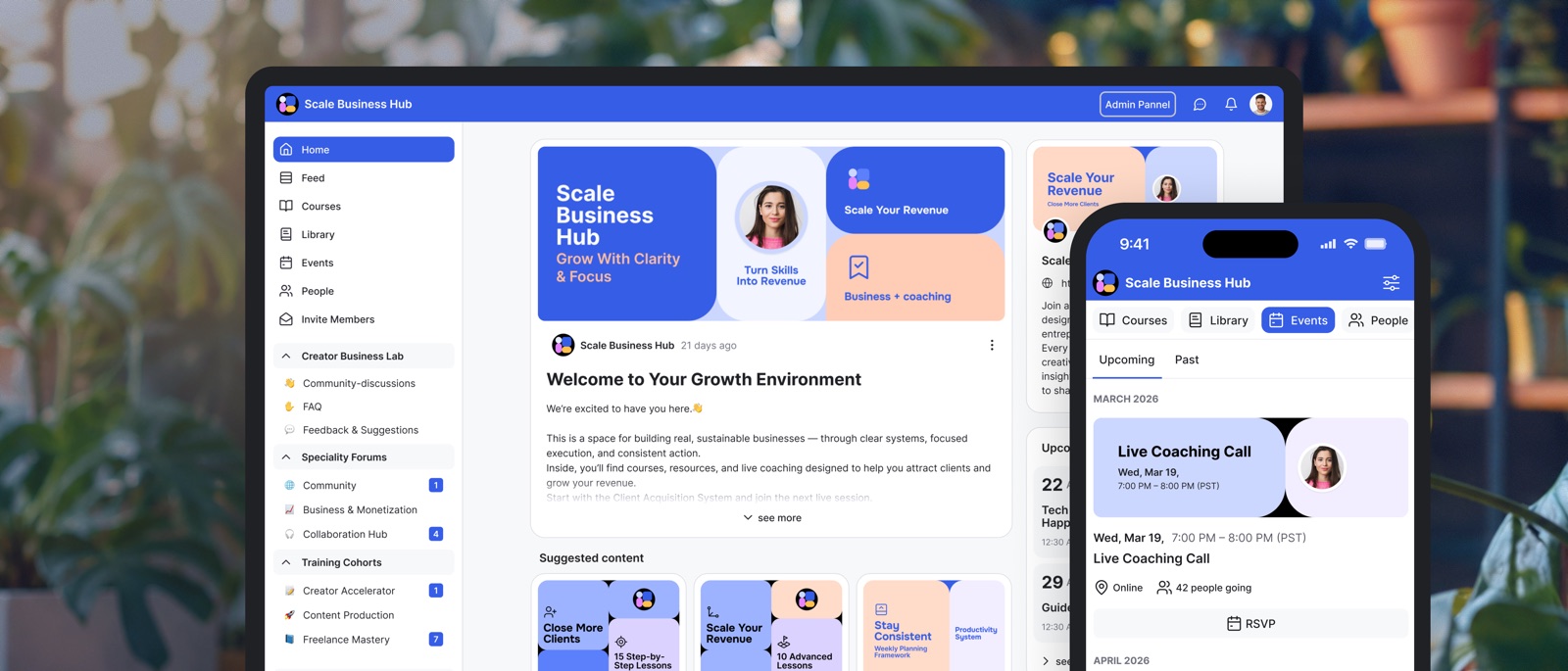
If you are looking to build a community around coaching, courses, and group learning, GroupApp is the platform I recommend most. It comes loaded with onboarding and moderation features that help members actually live by the rules you set:
- Automated onboarding: New members see your guidelines before they ever write a single post, completely closing that “I didn’t know the rules” loophole.
- Smart permission controls: Role-based permissions and quick moderation tools let you manage who posts where and remove anything that crosses the line—making your enforcement real, not just a threat.
- Self-enforcing channels: Dedicated spaces for promotion, general discussion, and support mean your anti-spam rule basically enforces itself by design.
- Built-in tools for group learning: Tools for cohorts, courses, and discussion channels directly inside lessons keep people engaged enough to actually care about the community culture in the first place.
Because GroupApp keeps members active through cohort learning and in-lesson chats, your rules govern a lively, engaged space rather than an empty room. Plus, it starts with a free plan and charges 0% transaction fees, so you can set up your community and launch your rules without worrying about your budget.
If you want a structured learning community where rules actually hold, the vibe stays warm, and members keep coming back, GroupApp is where I would build it.
At the end of the day, the platform is just the house you build. The culture is what you bring inside, and that’s what makes it feel like home.
How to Turn Guidelines Into a Living Culture
The biggest mistake people make with community guidelines is writing them once, putting them in a drawer, and completely forgetting about them.
However, the strongest communities treat their rules as a living expression of their culture that everyone helps uphold. When that happens, the culture starts doing the heavy lifting for you. Members absorb the standards, model good behavior, welcome newcomers into the fold, and gently call out bad vibes long before a moderator has to step in.
That’s the real endgame: a community that protects its own tone because everyone shares the same core values.
Getting there just comes down to building a few steady habits over time:
- Write with Purpose: Make sure every single rule serves a clear, practical reason.
- Enforce Consistently: Hold the line even when it feels tough or uncomfortable.
- Keep Culture Visible: Remind and celebrate good behavior so your values stay front and center.
- Evolve as You Grow: Update your guidelines regularly as your community expands and changes.
Do these things, and your guidelines turn into a shared agreement that makes your space feel safe, welcoming, and worth sticking around for. That’s when you realize a community that mostly runs itself frees you up to lead great conversations instead of playing referee all day.
So start with your purpose, cover the essentials, enforce fairly, use a platform that gives your rules life, and keep the culture alive through steady recognition.
Remember that contributor from the beginning, the one who broke two of our strictest rules while holding the attention of almost a fifth of our members?
He’s still with us today.
Back then, I had to sit him down for a heart-to-heart. I told him that being valuable didn’t put him above anyone else, that he would face the same consequences, and that none of it was personal. We just wanted him to come back better.
I gave him a two-week suspension, and when he came back, he drove our engagement up to 21%. What a guy.
That right there is the whole lesson in a single story: rules only mean something when they apply to everyone. When your community sees you hold that line, even with your star member, they finally trust that the rules are real.

Frequently Asked Questions About Community Guidelines
How detailed should community guidelines be?
Detailed enough to address the common situations clearly, but not so long that members won’t read them. The sweet spot is to cover the essential topics, spam, harassment, hate speech, privacy, moderation, and consequences, in plain language, then add detail over time as new situations arise that need clarification. Start lean, and let your guidelines grow from real experience rather than trying to predict every edge case on day one.
What’s the difference between community guidelines, rules, and standards?
Guidelines describe the tone and mindset you want (“Give more than you take”), rules set the specific enforceable lines (“No promotion outside #showcase”), and community standards express the deeper values that explain why the rules exist (“We build a culture of trust”). You need all three because the standards give the rules meaning, and the guidelines set the tone that makes the rules feel fair.
Should I show guidelines during signup?
Yes, at a minimum, require new members to acknowledge the existence of the guidelines before they participate. The most effective communities build rule-acceptance right into onboarding, using a checkbox or a short “Start Here” flow, because the best moment to set expectations is before a member’s first post rather than after their first mistake. That way, you avoid most accidental violations, and your enforcement rests on fairness, since nobody can say they never saw the rules.
How do I handle a valuable contributor who breaks the rules?
Apply the same standards you would to anyone else, because exceptions undermine the entire system. A high-value member who can’t follow the rules does more damage to community trust than their contributions provide, since every other member is watching to see whether the rules are real. The best thing to do is to enforce the consequence fairly and pair it with a direct, respectful conversation, so the member understands it’s not personal and has a path back.
How often should I update my community guidelines?
Review them on a recurring schedule, quarterly is a good start, and update them whenever a new situation exposes a gap. Communities evolve as they grow and as new members arrive, so guidelines that fit at 100 members may fall short at 1,000, which is why the strongest communities treat their rules as a living document rather than a fixed one. Add guidance for recurring problems, retire outdated provisions, and communicate changes openly so members always know the current standards.
What are the best tools for enforcing community guidelines?
Look for a platform with automatic onboarding to present rules at signup, role-based permissions to control who can do what, moderation tools to remove violating content, automated moderation or profanity filters to catch problems at scale, and member reporting so the community can flag issues. Among online community and engagement platforms, GroupApp pairs these governance tools with strong tools for group learning, such as cohorts and in-lesson discussion. It’s my recommendation for learning communities that want their guidelines to make a difference and hold up under pressure.
Also read: What Is a Community of Practice? Real Examples and How to Start One in 6 Easy Steps

Start your community for free today.
No commitment required.